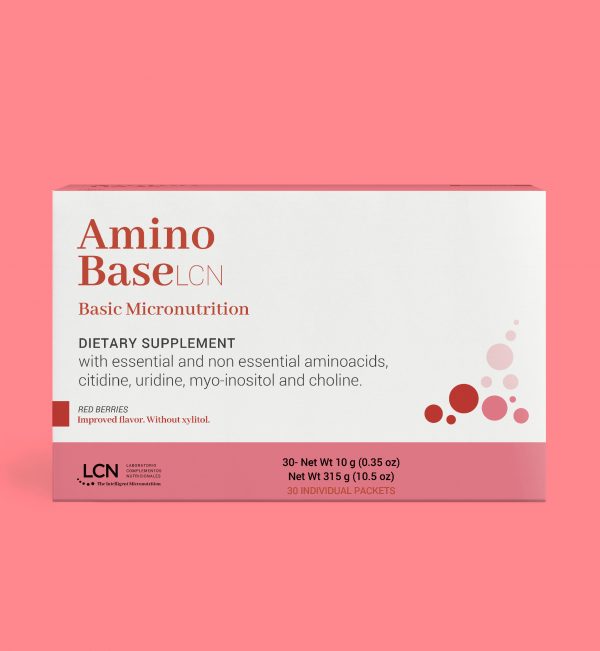


Inositol
What is it?
Inositol is an essential component of the phospholipids in the cell membrane.
Inositol supplementation
Inositol has a variety of stereoisomers, including myo-inositol and D-chiro-inositol. Myo-inositol is the most abundant form in the central nervous system. The biological function varies between the isomers.
Myo-inositol is absorbed efficiently in its free form through an active transport process. It is transported in the blood, mainly in free form and partly in the form of PI linked to lipoproteins. Free myo-inositol is converted to PI in tissues.
Foods with inositol
In plant-based foods, particularly in grain husks, inositol is mostly found as phytic acid, where the molecule is esterified with phosphoric groups. Fruits, legumes, and vegetables are also good sources of inositol.
Intake and deficiencies
It has weak lipotropic activity and helps move fat out of liver and intestine cells. Another inositol function is to serve as a second messenger system, as it is a constituent of intracellular phosphatidylinositol (PI), which is linked to serotonin, norepinephrine, and cholinergic receptors. Furthermore, PI is a source of important intracellular and secondary cellular messenger signaling in response to hormonal stimuli.
Inositol deficiency has been linked to an accumulation of fat in the liver and circulatory system (cholesterol), nervous system disorders (anxiety, irritability, nervousness, depression, hyperactivity), skin conditions (irritated skin, hair loss, brittle nails, eczema, dermatitis, etc.), constipation, and fertility problems.
Medications such as carbamazepine, valproic acid, and lithium lower inositol levels.